The Dahomey Amazons, also known as Agojie, Agoji, Mino, or Minon in the Fon language, stood as a unique all-female military regiment within the Kingdom of Dahomey, located in present-day Benin, West Africa. Flourishing from the 17th century until the late 19th century, they hold the distinction of being the sole female army documented in modern history. European observers bestowed upon them the title “Amazons,” drawing parallels to the legendary female warriors of Greek mythology.
The genesis of this extraordinary military unit traces back to a dire necessity within Dahomey’s society. With the male population facing significant losses in the frequent conflicts with neighboring West African states, the kingdom found itself in a precarious position. This tumultuous era coincided with Dahomey’s emergence as a prominent player in the transatlantic slave trade, exchanging captives with the Oyo Empire for commodities. The strain on male resources likely prompted Dahomey’s kings to enlist women into the military ranks, effectively forming a female-only army as a strategic response to the exigencies of warfare and as a means to circumvent the annual tribute of male slaves to the Oyo Empire.
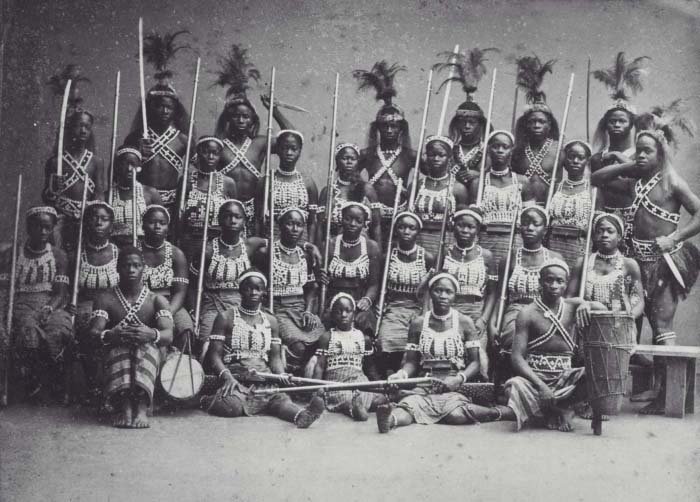
A group portrait of the Amazons from Dahomey during their stay in Paris, 1891 - Source: wikipedia.org. Credits - Collectie Wereldmuseum (v/h Tropenmuseum)
Dahomey Mino warriors, circa 1890. (Source: wikipedia.org)
Origins: The founding of what would evolve into the Mino regiment is attributed to King Houegbadja, who organized a group of elephant hunters known as the gbeto, possibly predating his reign. Queen Hangbe, daughter of Houegbadja, is credited with establishing a female bodyguard, laying the groundwork for the formidable force that would serve Dahomey. Accounts vary regarding the exact origins, with some disputing Queen Hangbe’s involvement. However, historical narratives converge on the pivotal role of King Agaja, who effectively employed the female warriors in Dahomey’s military victories, notably in the defeat of the neighboring kingdom of Savi in 1727. The term “Mino,” signifying “Our Mothers” in Fon, was the appellation used by Dahomey’s male army for these revered female warriors.
Recruitment and Training: Recruitment into the Mino was diverse, drawing from both foreign captives and free Dahomean women, some as young as eight years old. While some women volunteered, others were enrolled against their will, often due to familial petitions to the king. Membership in the Mino demanded rigorous training in physical endurance, survival skills, and martial prowess. The regiment’s discipline was paramount, with members required to abstain from familial and marital ties during their service, despite being legally married to the king. The Mino’s training instilled a sense of aggression tempered for wartime objectives, underpinned by the Fon belief in Vodun.
Combat and Structure: The Mino’s combat prowess was legendary, as they underwent relentless training in pain tolerance and warfare tactics. They formed a significant component of the Dahomey army, numbering between 1,000 and 6,000 women by the mid-19th century, constituting a substantial portion of the kingdom’s military strength. Structurally, the Mino operated in coordination with the broader army, with distinct regiments specializing in various combat roles. Their effectiveness in battle often surpassed that of their male counterparts, earning them admiration and respect.
Recruits underwent intensive training to become members of the elite Agojie. Public domain via Wikimedia Commons
Conflict with Neighboring Kingdoms: The Agojie battles constituted the primary conflicts for the Dahomey Amazons, involving engagements with various kingdoms and tribes across Africa. During this period, prevailing custom dictated that defeated adversaries faced enslavement or death. Dahomey adhered to this practice, frequently enslaving conquered foes and trading them to European slave merchants in exchange for weaponry. Notable conquests include the kingdoms of Whydah and Popos in 1728, along with the capture of the Mahee fortress at Attahapahms in 1840. However, the most significant setback occurred at the hands of their perennial adversary, Abeokuta, resulting in substantial casualties for Dahomey.
Conflict with France: The encroachment of European powers into West Africa accelerated during the latter half of the 19th century, precipitating clashes with Dahomey. In 1890, King Béhanzin initiated hostilities against French forces during the First Franco-Dahomean War. European observers lauded the Dahomey Amazons for their adeptness in close combat, despite their unconventional firing technique. Notably, at the Battle of Cotonou, numerous Dahomeans, including many Amazons, launched a fierce assault against French positions. However, the Amazons suffered a resounding defeat, with hundreds falling in battle.
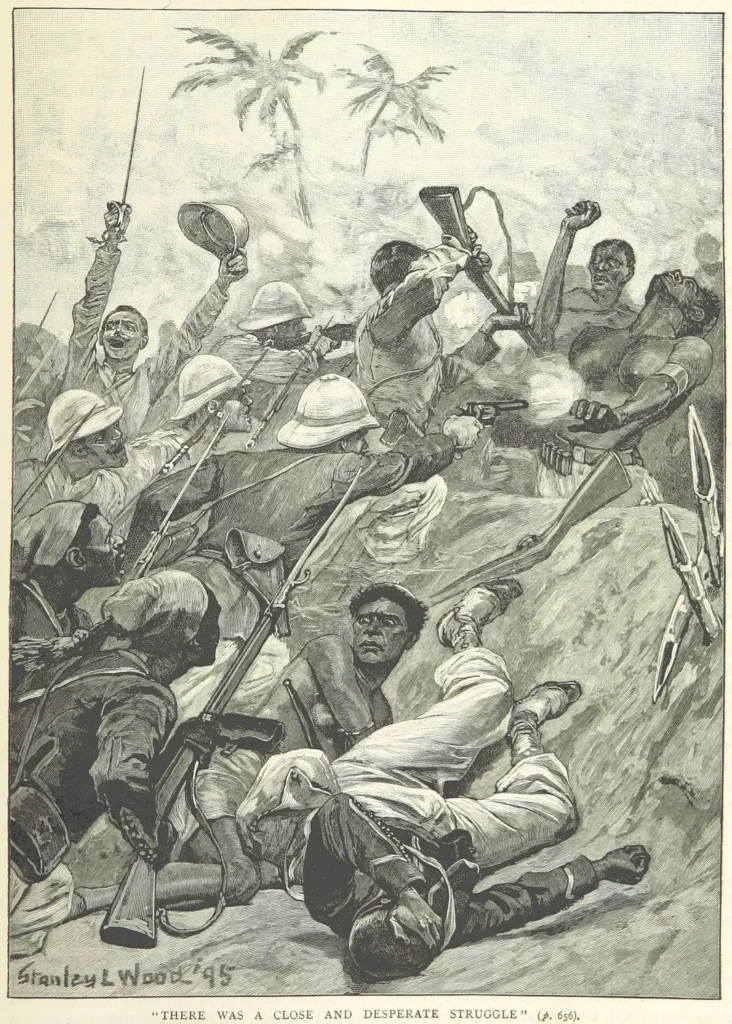
A British illustration of French and Dahomean forces fighting at Cotopa in 1893 (Source: Wikimedia Commons)
During the Second Franco-Dahomean War, specialized units of the Dahomey Amazons targeted French officers, showcasing their unwavering resolve and audacity in battle. Despite their valor, the Dahomey Amazons faced insurmountable odds against the technologically superior French forces. In a fateful encounter at Adegon in 1892, the bulk of the Amazon corps met their demise in a brutal bayonet charge by the French, resulting in staggering casualties for Dahomey.
King Béhanzin (Source: Getty Images)
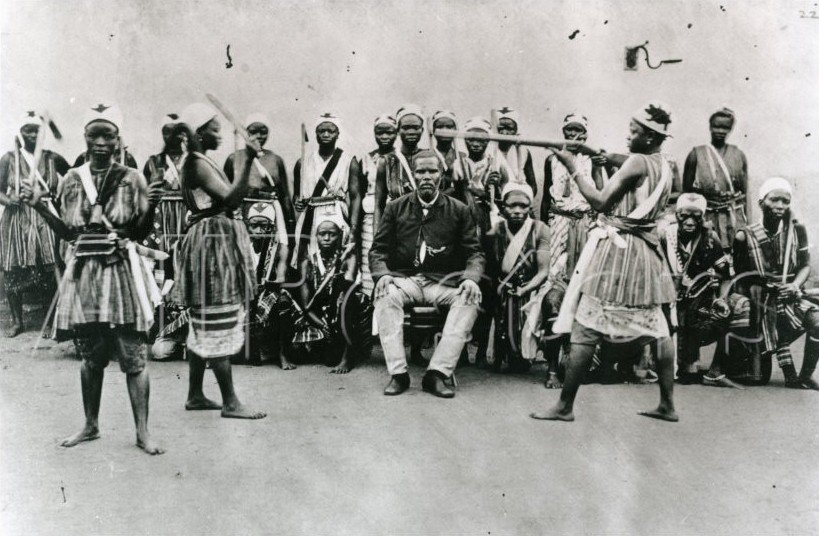
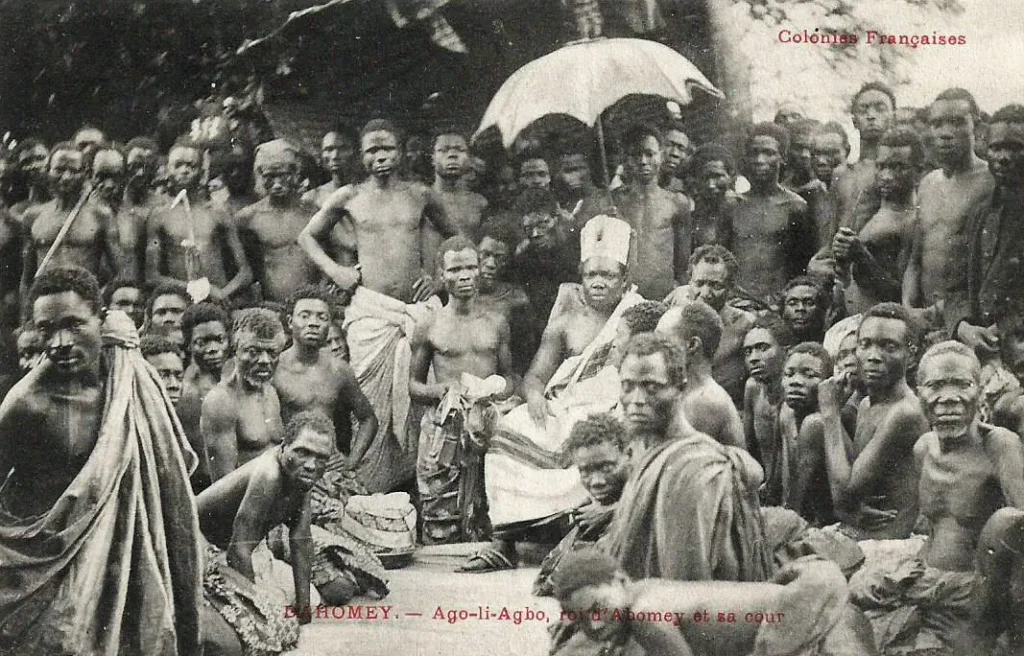
Agoli-agbo (seated, center), a puppet king installed by the French in 1894 (Source: Wikimedia Commons)
Disbandment and Legacy: Following Dahomey’s transformation into a French protectorate in 1894, the Dahomey Amazons were disbanded, marking the end of an era. Yet, oral traditions suggest that remnants of the Amazon corps clandestinely persisted in Abomey, where they purportedly carried out covert operations against French officers. Some Amazons integrated into civilian life, while others struggled to reconcile their identities as retired warriors, grappling with a loss of purpose and societal integration challenges.
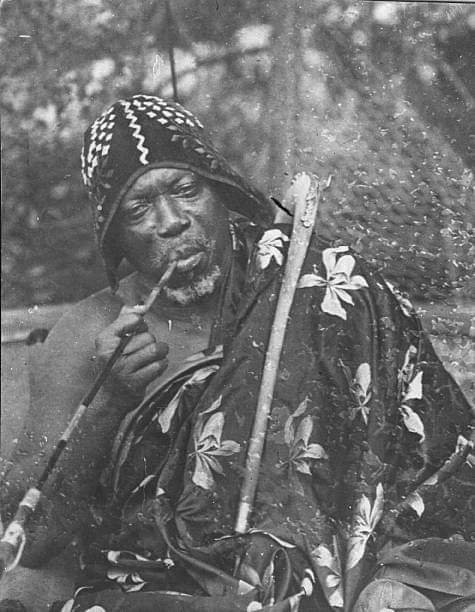
Encounters with former Amazons in the early to mid-20th century reveal a poignant narrative of aging warriors navigating life’s complexities. Despite the dissolution of their regiment, echoes of the Dahomey Amazons endure, inspiring subsequent generations and perpetuating their legacy of courage and resilience. The enigmatic figure of Nawi, believed to be the last surviving Dahomey Amazon, serves as a poignant reminder of their indomitable spirit, immortalized in the annals of history.
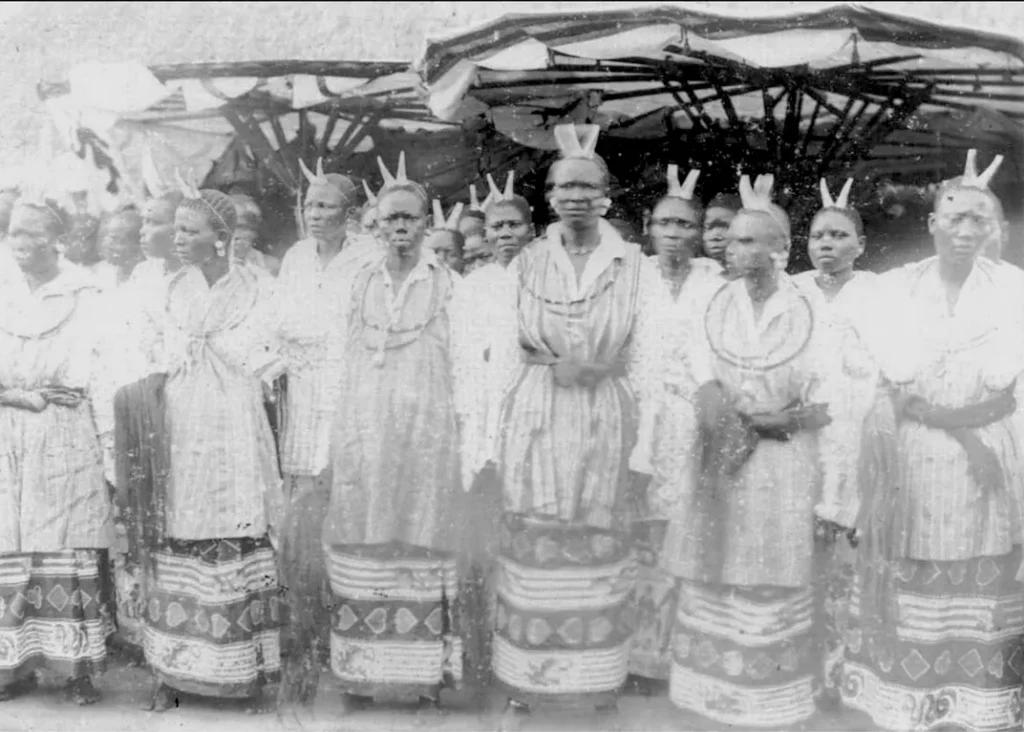
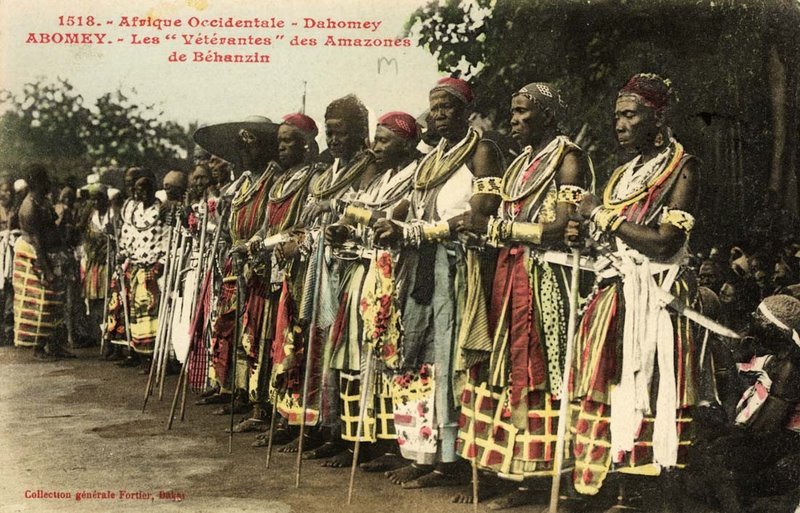
The veteran Amazone Women, Abomey (1908) (Source: wikipedia.org)