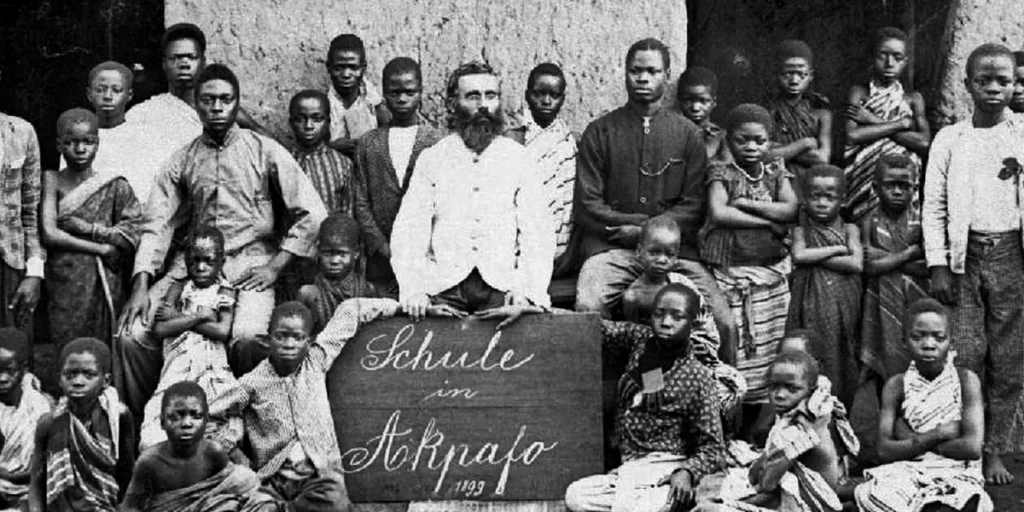
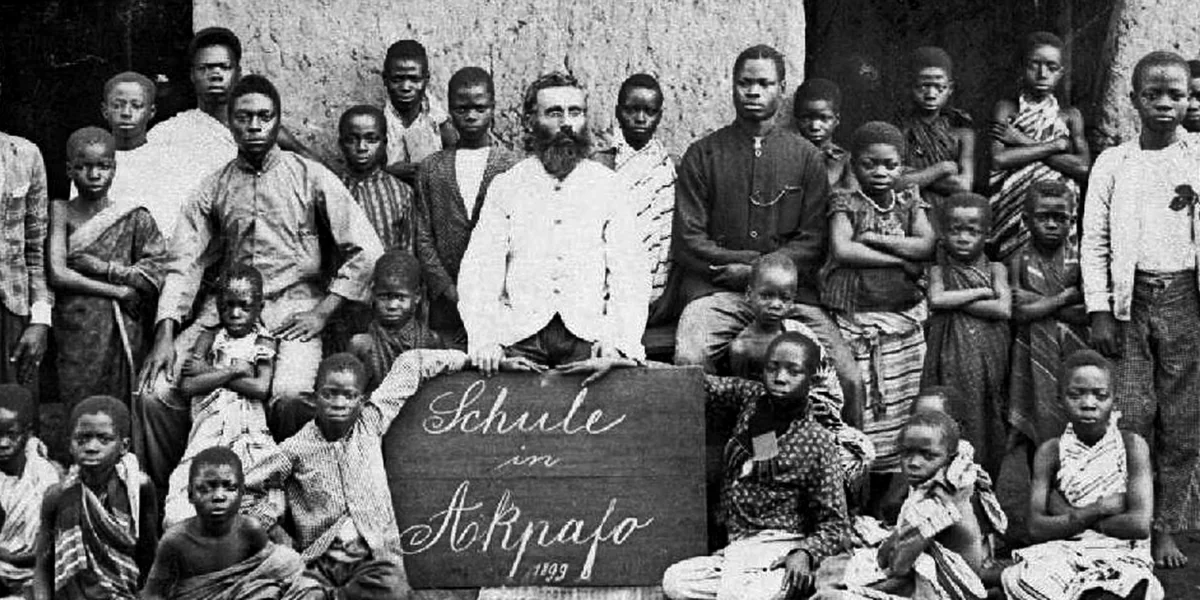
Students of a mission school in the former colony of Togo - North German Mission Bremen (Source: taz.de)
When you ask many Ewe (Eʋe) people today, especially the youth, what the word “Yevu” means, they will quickly say it means “a white man” or “a White person.” But the real story behind this word is much deeper. Yevu does not actually include the Eʋe word for “person,” nor the word for “white” (ɣi). Instead, it comes from two older words: Aye meaning “tricky,” and Avu meaning “dog.” Put together, they form Yevu, which means “cunning dog.” This was the way the Eʋes described Europeans during their first encounters, people who spoke kindly but acted with hidden motives.
When Europeans began arriving on the Eʋe’s coast, they came with trade goods, promises, and clever words. The Eʋes quickly noticed how these strangers often behaved — outwardly friendly but inwardly cunning. The word Yevu captured this perfectly, showing that the Eʋes were not fooled by appearances. Over time, the name became the common way to refer to Europeans, carrying with it the memory of trickery and exploitation.
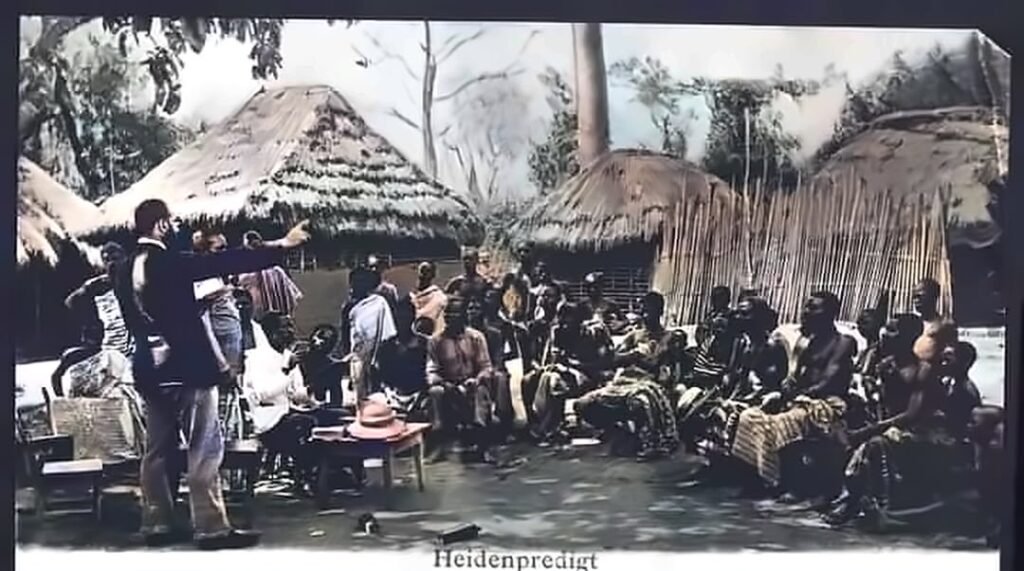
German missionaries preaching in Togo between 1891-1910
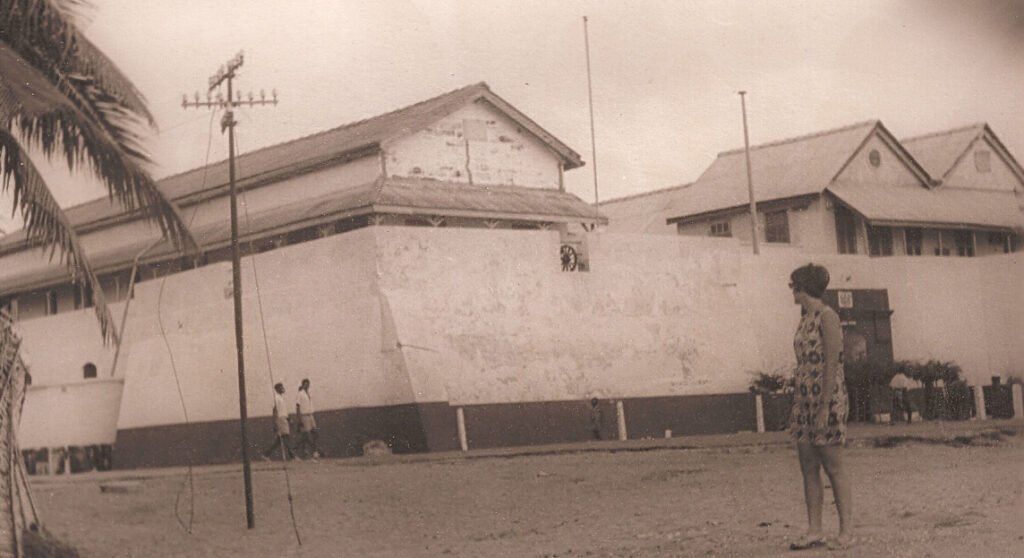
One of the most important places where this history unfolded was Keta, a busy town by the sea. In 1784, the Danes built Fort Prinzenstein there, a large stone fortress meant to control trade in gold, ivory, and enslaved people. The fort stood tall above the sandy coast, changing the life of the town forever. For the Ewe, it was a daily reminder of how the Yevu had settled among them, not through open war, but through clever deals, strong walls, and control of trade.
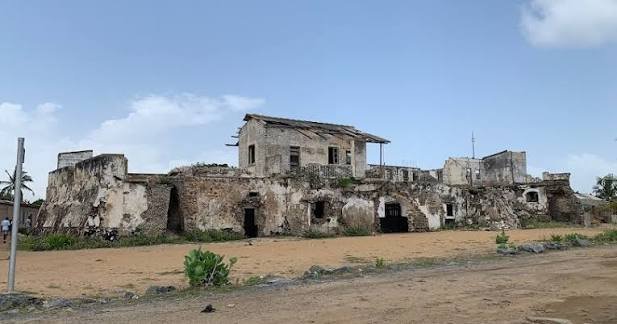
Even today, the ruins of Fort Prinzenstein remain in Keta, battered by the sea but still standing. They remind us of those early encounters and the cleverness — sometimes cruel — of the Europeans who came. The word Yevu carries that memory. It is more than just a word for “White man.” It is a story of how the Ewe saw through trickery, named it, and passed that truth down through generations.
Fort Prinzestein Keta, Volta Region, Ghana - 1970.
Fort Prinzestein, Volta Region - 2026
Even today, the ruins of Fort Prinzenstein remain in Keta, battered by the sea but still standing. They remind us of those early encounters and the cleverness — sometimes cruel — of the Europeans who came. The word Yevu carries that memory. It is more than just a word for “White man.” It is a story of how the Ewe saw through trickery, named it, and passed that truth down through generations.