





A word for spiritual power Vodun is a religious tradition rooted among Gbe-speaking peoples of the Gulf of Guinea, including Fon and Ewe communities. The word is often translated loosely as spirit or deity, but no single English equivalent captures…
A word for spiritual power
Vodun is a religious tradition rooted among Gbe-speaking peoples of the Gulf of Guinea, including Fon and Ewe communities. The word is often translated loosely as spirit or deity, but no single English equivalent captures its meanings. Vodun is not one centralized church with a universal creed. It includes many local spirits, lineages, shrines, ritual specialists and community practices.
Popular media have often reduced Vodun to spells, dolls or frightening images. Those representations flatten a living religion into spectacle. In community settings, spiritual relationships may involve protection, healing, moral responsibility, family history and obligations to a particular place. The ways these relationships are understood differ among practitioners and towns.
A network of relationships
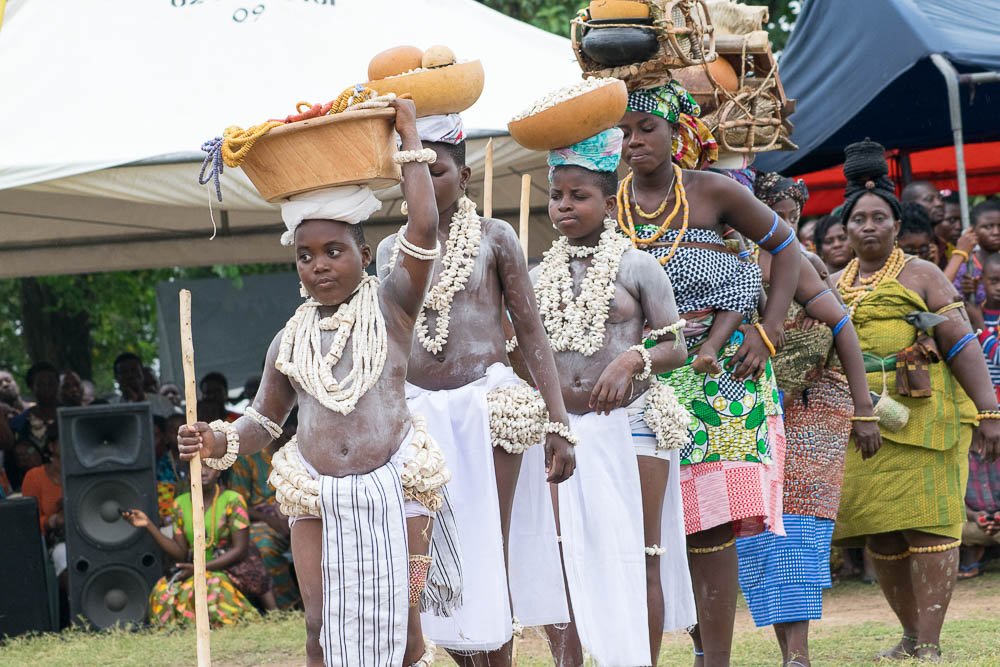
A shrine may be associated with a particular spirit and maintained by a family or trained custodian. Ritual specialists learn the appropriate prayers, offerings and prohibitions through apprenticeship and initiation. Divination may help interpret a problem or guide a decision. Festivals can bring dispersed relatives home and renew links among families, shrines and local authorities.
These practices exist alongside other religious traditions. Ewe communities include Christians, Muslims and people who identify with customary religion in different ways. Some households negotiate multiple affiliations; others make a clear choice. It is therefore inaccurate to assume that every Ewe person practices Vodun or that one religious identity explains all cultural life.
A history across borders
The Gbe-speaking world predates the modern borders between Ghana, Togo and Benin. Colonial rule and later nation-states divided communities whose ritual networks, kinship and languages continued to cross borders. Vodun also traveled through the Atlantic slave trade, taking transformed forms in the Americas and Caribbean. These related religions share historical connections but are not interchangeable; each developed in distinct places and political conditions.
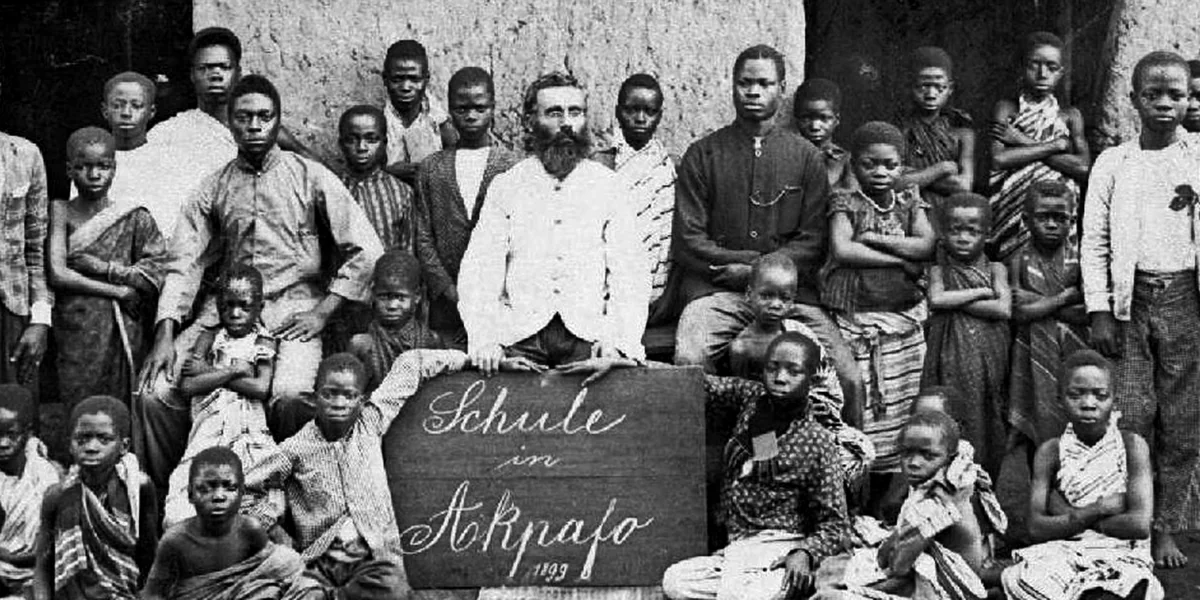
Colonial officials and missionaries often described African religions through hostile or dismissive categories. Later popular accounts sometimes repeated those judgments. Contemporary scholarship instead asks how practitioners understand their own traditions and how ritual relates to social life. Listening to community voices is essential, particularly when practices are private or knowledge is restricted.
Telling the story respectfully
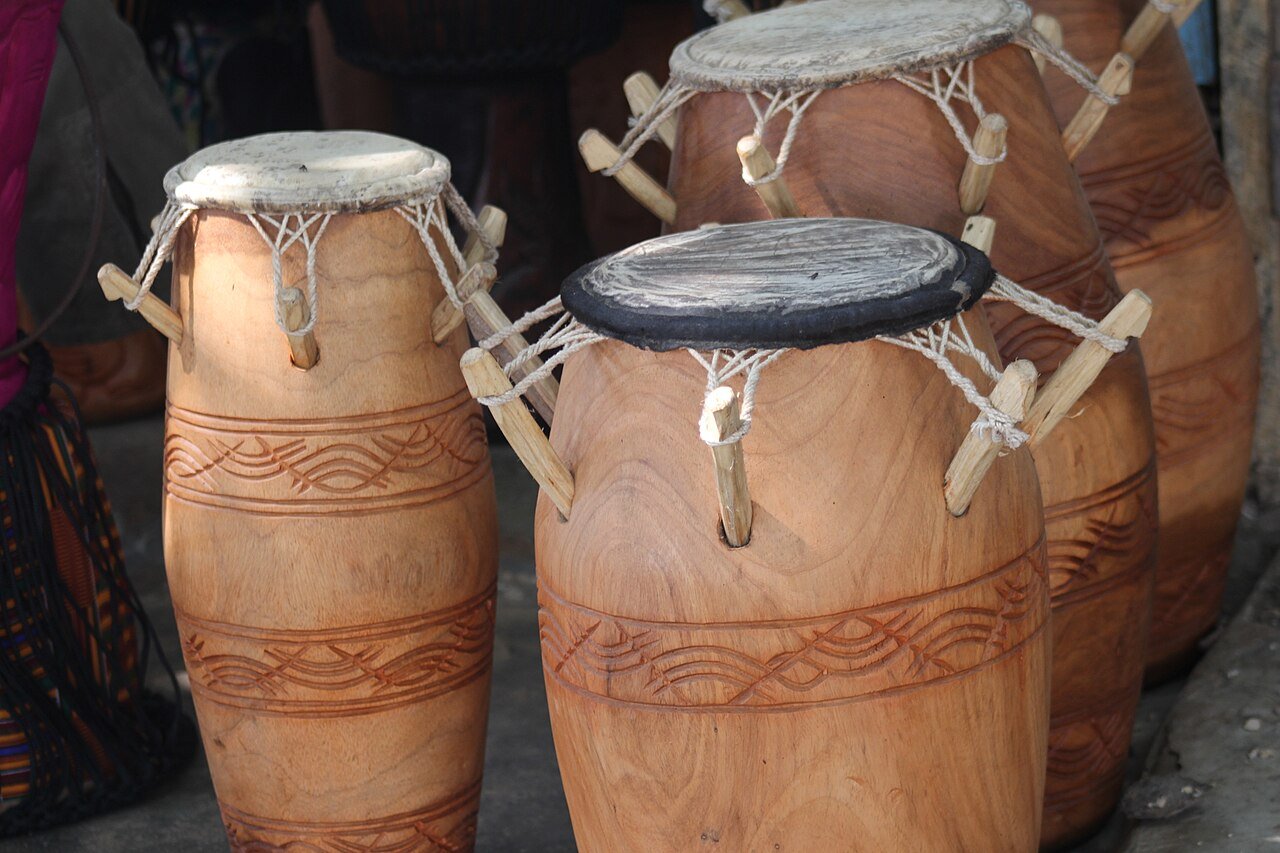
An archive can explain the history, vocabulary and public festivals of Vodun without exposing sacred knowledge. It should use the names practitioners use, distinguish Ewe traditions from neighboring Fon traditions, and identify the location and community being discussed. Images need context and permission; a shrine object cannot be treated as a decorative prop.
Vodun’s history is part of Ewe heritage because it belongs to a broad, interconnected religious landscape. Understanding it means seeing the people, obligations and histories behind the word, not relying on stereotypes.
The name is not the whole religion
Vodun is a family of religious traditions, not a single institution with one creed and one uniform ritual calendar. The term is used across Gbe-speaking communities, including Fon and Ewe communities, but local histories, spirits and ritual responsibilities differ. A description that treats Vodun as one exotic system tells readers little about the people who practice it.
The religious landscape of Ewe communities includes relationships with deities, ancestors and sacred places. A particular shrine may be cared for by a lineage, while a priest or priestess undergoes training to serve it. Practices can include offerings, prayers, festivals and divination. Those activities are not necessarily open to outsiders, and their meaning depends on the community and spiritual relationship involved.
The early ethnography in Spieth’s book documents religious life as it was described in Ho and nearby towns in the late nineteenth and early twentieth centuries. It preserves names and reports that would otherwise be hard to recover, but its language reflects a missionary author who often wrote from a Christian perspective. The text can be read for its record of what informants said and for the colonial judgments that shaped how their religion was described. It should not be used as a timeless checklist of Ewe belief.
Vodun has also been misunderstood through colonial and popular portrayals. Missionary texts sometimes described African religions as superstition; contemporary films and tourist imagery may reduce them to frightening magic. Both frames make practitioners disappear. A more useful account asks what obligations a shrine creates, how ritual knowledge is learned, what a festival means to participants and how beliefs relate to family history and social responsibility.
The Gbe-speaking region extends across present-day Ghana, Togo and Benin. Modern boundaries divided communities whose language, kinship and religious ties often crossed the line. The Atlantic slave trade carried related religious traditions into the Americas and Caribbean, where they developed in distinct ways. Vodun in Benin, Haitian Vodou, Louisiana Voodoo and Brazilian traditions share historical connections but are not interchangeable names for the same practice.
Today, Ewe people identify with Christianity, Islam, customary religion and combinations of commitments. Some households have changed religious affiliation across generations; others maintain shrine relationships. The choice is personal and communal. An article must avoid saying “the Ewe believe” when describing a practice specific to a shrine or town.
The archive can tell this story well by naming the practitioners who choose to speak, describing public ceremonies in context and acknowledging what cannot be photographed or published. That approach is more educational than exposing sacred objects for clicks. It gives Vodun a place in regional history without treating living religious knowledge as an exhibit that belongs to everyone.
Shared roots do not make every tradition identical
Because Vodun traditions move across Gbe-speaking communities, readers may expect a single system that can be summarized in a paragraph. But shared language does not erase local difference. A spirit’s name, a shrine’s responsibilities or a festival’s form may be particular to one community. The broader regional connection is a map for research, not proof that every practice is interchangeable.
The same caution applies to religions in the diaspora. Atlantic slavery carried religious knowledge across the ocean, where communities adapted it under new conditions. Haitian Vodou and related traditions in the Americas have their own histories, institutions and vocabularies. They should be connected to West African sources without being collapsed back into one generalized “Voodoo.”
Ewe practitioners, scholars and community organizations describe Vodun through healing, moral responsibility, family history and sacred place. Naming the community and time period counters sensational portrayals without exposing private practice.
Distinguishing Vodun, shrine and spirit
The term Vodun is used across parts of the Gbe-speaking region, but it can refer to a spiritual power, a cult or a wider religious tradition depending on the context. Ewe speakers may distinguish among Mawu, trɔ, vodu and ancestors, although vocabulary and practice vary. Translating each term as “god” can flatten distinctions between a creator, a localized spiritual force, an ancestral presence and an institution of worship.
A shrine is not merely a container for an object. It can be a place where a community maintains a relationship with a spiritual power, observes prohibitions and gathers for ritual. Priests and priestesses may undergo training and initiation, learn songs and prayers, and assume obligations to the shrine. Some aspects are public; others are restricted. Respectful writing explains the social role without publishing material that custodians consider private.
Afa divination provides another important example of the region’s religious knowledge. A diviner interprets signs through a system that has an organized repertoire of verses and associations. People may consult Afa about uncertainty, illness, conflict or a decision. It is not simply fortune-telling in the popular sense; it is a learned method of interpretation embedded in relationships between practitioner, client and spiritual authority.
Religious practices have always moved through contact. Ethnographic sources describe Ewe shrines and cults connected with neighboring communities, including Dahomean and Togolese traditions. The borrowing of a religious power does not make a community’s religion less authentic. Across West Africa, people have adopted, adapted and localized practices through travel, marriage, trade and political change.
Colonial missionaries often described Vodun through a language of superstition or darkness. Later popular media sometimes repeated that framing through images of “voodoo” as magic or danger. The history is more grounded in community institutions, moral obligations and ritual knowledge. At the same time, a respectful account need not romanticize every practice or ignore questions of gender, authority and social change.
Contemporary Ewe religious life is diverse. Traditional worship continues in some communities; Christian and Muslim institutions have deep histories; people may move among these worlds or identify strongly with one. No single account can speak for every person. Vodun is best approached through specific communities, practitioners and historical contexts rather than a single definition imposed from outside.
Sources and further reading
Sources and further reading
- University of Ghana, Afa research among Ewe communities
- Edinburgh research on Ewe-Dome ritual
- Encyclopaedia Britannica, “Vodun”
- Jakob Spieth, The Ewe People, Ho chapters on religion (1906; English edition 2011; supplied book)
- University of Ghana, Afa and Ewe religious research
- S.K. Godogoe, Yeve music, performance and hierarchy
Share: