




Meet Afedima of Woe, the Anlo woman remembered for introducing the yevudor beach-seine net, and explore how fishing technology, trade and women’s work changed along the Keta coast.
In coastal memory, one of the most consequential innovations in Anlo fishing is associated with a woman from Woe. Her name was Afedima. A beach-seine net called yevudor—often glossed as “European net” or “white man’s net”—is remembered as arriving through her initiative in the nineteenth century. The story is not a complete biography, and the details are debated. But the account places an Anlo woman at the centre of a change that helped reshape work, trade and life along the Keta coast.
This story belongs to a wider history of Anlo communities adapting to the lagoon, the Atlantic and changing markets. It also reminds us that technology travels through people: a net’s value depends on the knowledge, labour and decisions of those who make it useful.

Before the yevudor: lagoon knowledge and coastal skill
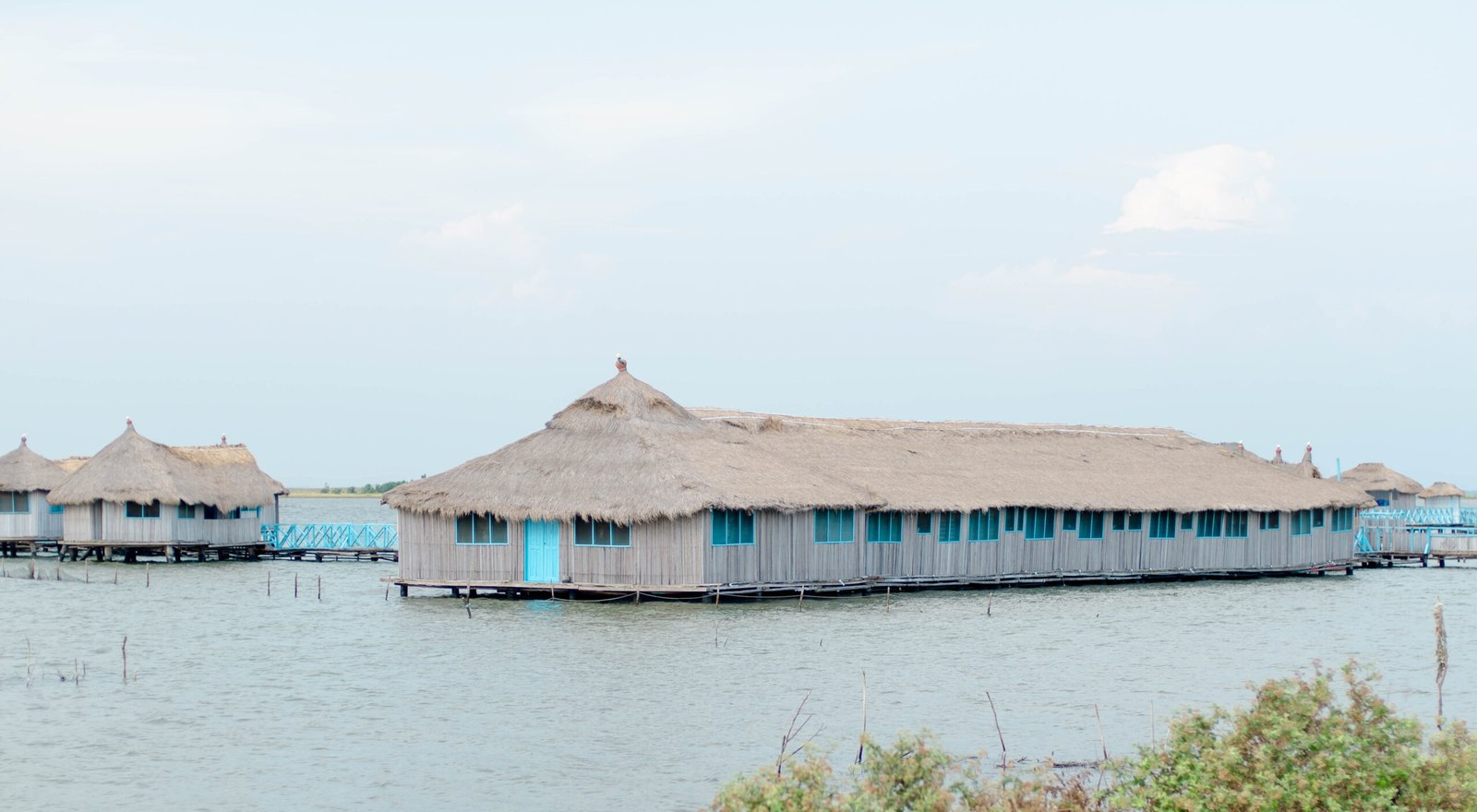
Anlo fishing did not begin with a European-style net. Communities around the Keta Lagoon already relied on detailed knowledge of shallow water, seasons, fish movement, boats and local access. Historian Sandra E. Greene, drawing on oral traditions and written records, describes earlier Anlo technologies such as the agowu, a craft hollowed from a fan-palm trunk, and the more stable lewu, whose introduction is attributed in tradition to Amega Le. Those histories show that Anlo fishers experimented and improved their tools long before the yevudor became prominent.
The sea presented a different challenge. Surf and a shifting sandbar made landing difficult, so fishing in the lagoon could be safer than working the open coast. A shore-operated seine offered a way to pursue larger catches from the beach rather than relying only on boats far offshore. The new method built on local experience while opening a different kind of coastal fishery.
Afedima of Woe and a story carried through memory
G. K. Nukunya’s 1989 study records a Keta-area account that the first yevudor was purchased by Afedima, a woman of Woe and the daughter of a prominent local man named Anatsi. Nukunya places her birth in the first quarter of the nineteenth century and her death toward its end, dates inferred from genealogies rather than a surviving birth register. A 2026 study by David Wilson likewise identifies Afedima as the woman most commonly associated with bringing the net to the Anlo coast between the 1850s and 1870s.
One version of the story says that Afedima travelled to Europe with a white man, married him, and returned with the net. Wilson traces that account to an interview with Woe’s chief fisherman recorded in 2004. It is valuable evidence of how the community remembers the innovation, but it is not independent documentary proof of every detail of her journey or marriage. We should preserve the tradition without presenting uncertain episodes as settled fact.
Even with those limits, Afedima’s place in the story matters. The account remembers her as a purchaser and introducer of equipment, not simply as a spectator to men’s work. That does not mean she alone invented the net or that one person transformed fishing overnight. It does mean Anlo history preserves a woman’s commercial initiative as part of a major technological change.
What changed when the net reached the shore?
The yevudor was a beach seine: a large net worked from shore. Its use helped Anlo fishers build a reputation for beach-seine fishing and created new commercial opportunities. The net’s name itself points toward the way people understood its foreign association, while its adoption depended on local choices about when, where and how to use it. As Wilson argues for the wider Gold Coast, African fishers and entrepreneurs actively selected, adapted and debated new equipment. They were innovators, not passive recipients of outside technology.
Fishing also connected people who did different parts of the work. A 2026 account of coastal Ghana describes sea fishing as a largely male occupation while women controlled much of the processing and marketing after catches came ashore. Fish moved from landing places through local and regional markets; traders linked coastal communities to inland consumers. That broad coastal evidence should not be mistaken for a single rule in every Anlo town, but it helps us see why a change in net size could affect far more people than the crew pulling it.
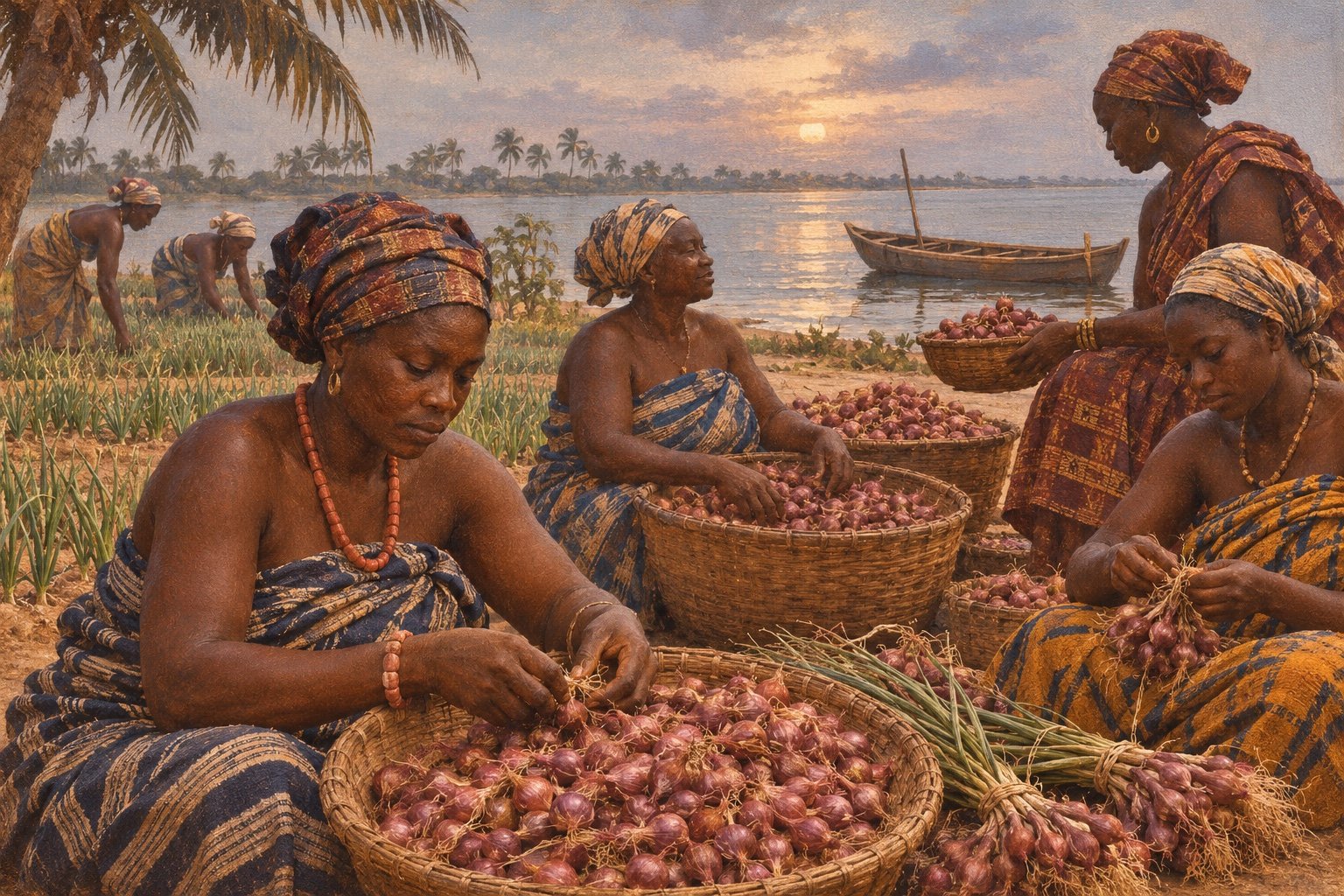
In Anlo, new commercial fishing existed alongside other livelihoods. Nukunya describes shallot growing around Anloga, Dzita, Whuti and Woe becoming more commercial around the early twentieth century, alongside salt-making, kente weaving, trade and other work. The history of fishing therefore belongs to a mixed economy, not to a community defined by one occupation alone.
Did you know?
The name yevudor is commonly translated as “European net” or “white man’s net.” Yet the people who chose to use it on the Anlo coast were African fishers and entrepreneurs, working with local knowledge and local markets.
Opportunity, argument and environmental questions
Bigger nets could produce larger hauls, but greater efficiency raised hard questions. Wilson’s study follows disputes over large nets in coastal Ghana from 1898 to 1923. Fishers argued over prices, access, labour, migration and the possibility that less-selective nets might catch juvenile fish or reduce later catches. The disputes drew African authorities and colonial officials into decisions about fishing rights. The Anlo coast had its own pattern: Wilson notes that disputes over yevudor use became more visible in the early twentieth century as coastal erosion encouraged more Anlo fishers to migrate and brought them into contact with other fishing communities.
These arguments were not simply a contest between “tradition” and “modernity.” They were debates among people with different interests and deep knowledge of the fishery. Net owners could see opportunity in higher yields; other fishers worried about future supply and fair access. Women involved in processing and trade had their own stake in what was caught, how much reached the market and at what price. The historical record shows innovation bringing both prosperity and new tensions.
Why Afedima’s story still deserves to be told
Afedima’s story joins several histories that are often separated: women’s economic agency, Anlo technical knowledge, the circulation of tools across the Atlantic world, and the growth of markets along Ghana’s coast. It is also a lesson in how historians work. A remembered account can reveal what a community values, while dates and dramatic details still need careful checking against other evidence.
Read alongside the story of Ewe in print and the wider history of Ewe states and political diversity, the Afedima tradition shows that Ewe history was shaped not only in councils and conflicts. It was also made on beaches, in markets and through the decisions of people whose names survive because others kept telling their story.
Sources and further reading
- David Wilson, “‘The Net That Catches the Most Fish’: Fishing, Innovation, and Law in the Gold Coast Colony (Ghana), c. 1898–1923,” Journal of African History (2026).
- G. K. Nukunya, “The Anlo-Ewe and Full-Time Maritime Fishing: Another View,” MAST 2(2), 1989, pp. 154–173.
- Sandra E. Greene, “Social Change in Eighteenth-Century Anlo: The Role of Technology, Markets and Military Conflict,” Africa 58(1), 1988, pp. 70–86.
Editorial note: Afedima’s life is reconstructed from later oral testimony and genealogical estimates cited in published studies. The article identifies those limits rather than treating every remembered detail as verified biography.
Share: