




A treaty signed under pressure German Togoland began not with an empty map but with political negotiations conducted under unequal pressure. In 1884, German agents established a protectorate along the coast. Historian Dennis Laumann notes that in…
A treaty signed under pressure
German Togoland began not with an empty map but with political negotiations conducted under unequal pressure. In 1884, German agents established a protectorate along the coast. Historian Dennis Laumann notes that in Aného, German soldiers took local chiefs aboard the warship Sophie and forced them into negotiations. Further west, German commissioner Gustav Nachtigal signed a treaty in the Lomé area with a local official known in European records as Plakkoo. The colony’s creation involved African authorities, but the treaty process occurred within the expanding force of European imperialism.
Germany later described Togoland as a “model colony,” pointing to its relative profitability and administrative achievements. That label was part of colonial self-presentation. It did not mean rule was gentle or that local communities freely designed the system. The colonial state imposed taxes, demanded labor, regulated trade and sought control over land and transport. The experience varied by region, and African communities negotiated, resisted and adapted in different ways.
Railways carried crops and authority
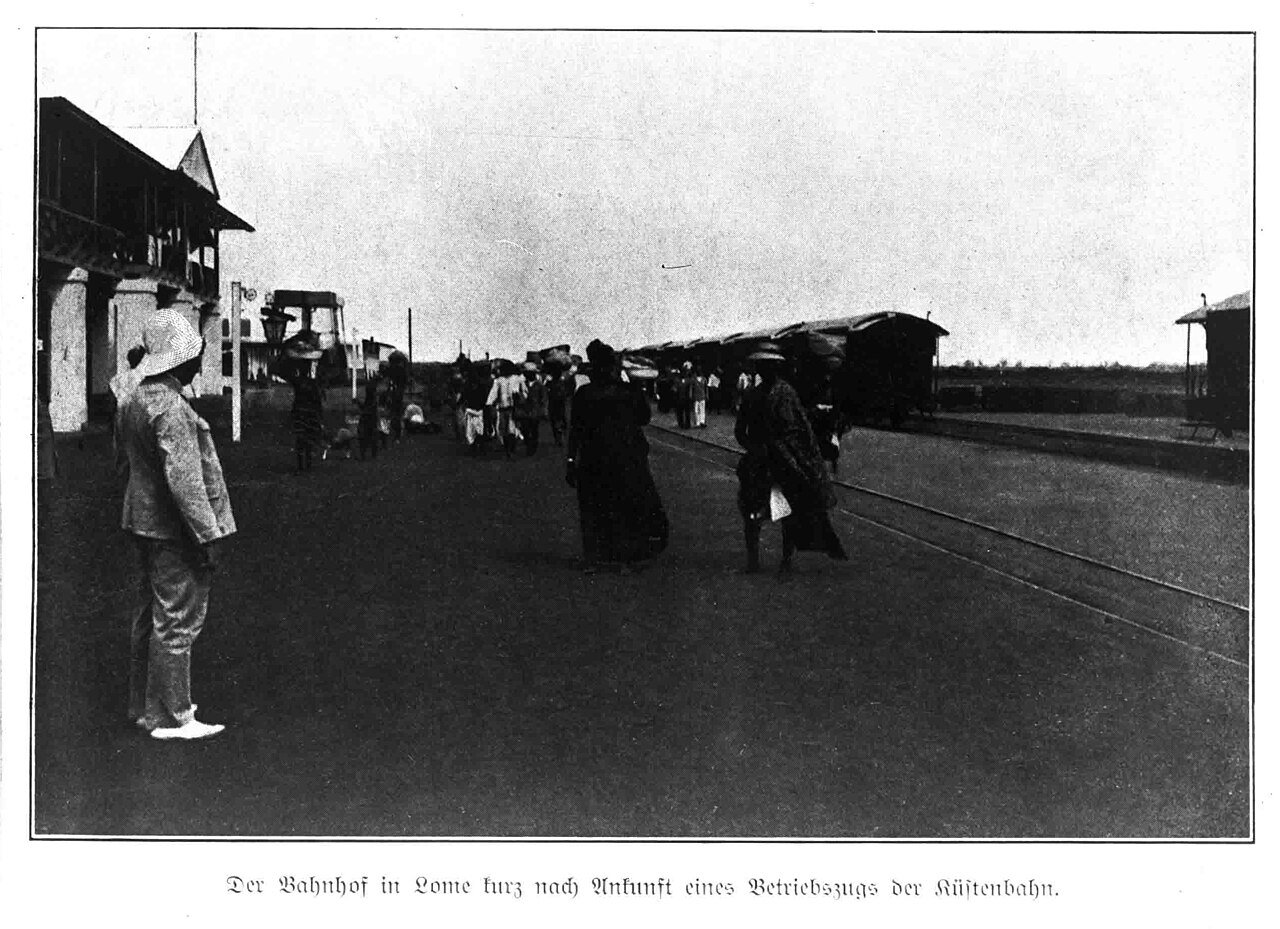
The colonial administration built railways from Lomé toward Aneho, Kpalimé and Atakpamé. These lines moved goods such as cocoa, coffee, cotton and palm products toward the coast. The railways also carried officials, soldiers, traders and workers. Infrastructure linked inland regions to the port, but its routes followed both colonial priorities and older commercial pathways.
Lomé’s growth as the capital depended on port facilities, warehouses, government offices and the work of African residents. The city drew Ewe-speaking people and traders from other communities. Colonial planning tried to organize urban space, but residents gave the city its everyday life through markets, workshops, neighborhoods and family networks.
The export economy changed land use and labor. Farmers responded to new demand for cash crops, while merchants and transport workers built businesses around the new routes. The benefits were uneven. A railway could open a market and also strengthen the administration’s ability to collect taxes and move goods out of the territory. The same infrastructure could mean opportunity for one household and new obligations for another.
Mission schools and the politics of language
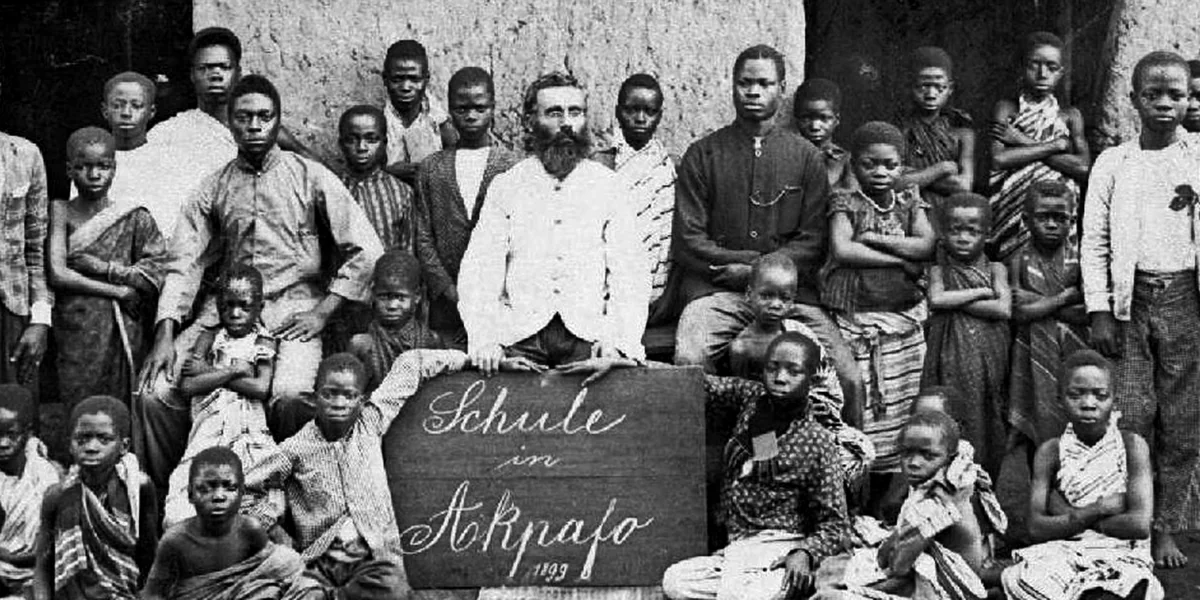
The Bremen Mission had been active among Ewe communities before formal German rule. Missionaries opened schools, translated scripture and promoted Ewe literacy. The colonial administration later made selective use of the language, especially when German instruction failed to reach the population it wished to govern. Language education thus developed at the intersection of religious mission, African aspiration and imperial administration.

African teachers and translators used those institutions to build their own authority. Ludwig Adzaklo’s role in the Ewe Bible project shows that a local speaker could become a central intellectual collaborator, even when colonial records minimized his status. Ewe literacy enabled people to communicate across towns, publish and participate in new forms of public life.
War ended German rule
World War I reached Togoland in August 1914. British and French forces entered the colony from neighboring territories. German troops and officials surrendered later that month. The war lasted only weeks in Togoland, but its consequences were permanent: Germany lost its overseas colonies, and Togoland came under Allied administration.
After the war, the League of Nations divided the former colony into British and French mandates. The British administered the western territory from the Gold Coast; France governed the eastern territory. After World War II, these areas became United Nations trust territories. The division cut through an area of Ewe-speaking communities whose families and institutions had already crossed the coast and interior.
A history beyond the “model colony”
The phrase “model colony” tells us how German officials wanted Europe to view Togoland. A fuller history asks how people experienced taxation, labor, schools, military campaigns, railway construction and the drawing of borders. It also asks how they used new institutions for their own purposes. The colonial state changed the region, but it did not replace the agency of the people who lived there.
The most revealing story is how Ewe communities made a life within an imperial project and then faced a new political map when the empire fell. Some worked through mission schools and trade; others resisted or negotiated with local officials. After partition, activists and chiefs debated whether the two Togolands should reunite, join the Gold Coast or follow another political path. Those decisions became part of the next chapter of the region’s history.
Who built the railways and who benefited
The railway lines of German Togoland are often remembered as signs of colonial modernization. They were also built to move crops and strengthen administrative control. African workers laid track, carried materials and maintained the system; traders used the lines to send goods toward the coast. The railway connected places, but the direction of the network reflected the colonial economy’s priorities.
Lomé to Aneho opened in 1905; later lines reached Kpalimé in 1907 and Atakpamé in 1911. These routes linked the port to agricultural regions and helped exports move more efficiently. Farmers could reach new buyers, but they also faced changing expectations about production and taxation. Transport infrastructure created opportunities and obligations at the same time.
Colonial government entered local life
German administration expanded over decades. Officials negotiated with chiefs, relied on interpreters and attempted to classify communities. The colonial state was not omnipotent at the beginning; it worked through local authorities and built its reach through roads, railways, taxes and missions. African leaders could use the system to advance local interests, but the system constrained what decisions they could make.
The “model colony” image hid coercion and conflict. Colonial accounts emphasized economic profitability and administrative order, while African experiences were less visible in European archives. Historians have called for oral histories to complement those records. Local memories can show how a tax was collected, what labor a village provided or how a new rail line affected a market.
Mission, school and colonial identity
Mission schools expanded literacy and trained teachers. Ewe became a language of education and scripture, helping people communicate across communities. At the same time, German administrators promoted German in some settings and viewed language policy through their own concerns about loyalty and control. African students and teachers used education for purposes beyond conversion: they gained skills, moved into public employment and began to represent their communities in writing.
War and the end of empire
When World War I began, Togoland’s strategic position between British and French territories made it vulnerable. The Allied invasion in August 1914 ended German control within weeks. The territory’s surrender brought a new administration, followed by a formal division. The railway lines and port remained, but the political map changed around them.
German rule left lasting marks on urban life, infrastructure, language and institutions. It also intensified interactions that were already underway among Ewe-speaking communities, other African peoples and Europeans. The story is not one of a colony simply modernized by Germany. It is a history of people living with an imperial project, making use of some changes and resisting others, then confronting a border created after the empire fell.
Colonial infrastructure served a political economy
German Togoland was often described by German officials as a “model colony,” a phrase that celebrated administrative efficiency and profitable infrastructure. The label reflected the colonial state’s point of view. Railways, roads, plantations and the port of Lomé were built to strengthen government control and move export crops, including cocoa, cotton and coffee. These systems also changed local travel, labor and trade, but their benefits were unevenly distributed.
Railway lines connected Lomé to Aneho, Kpalimé and Atakpamé in stages between 1905 and 1911. Construction involved African labor and required land, supplies and administrative authority. The routes reorganized commercial geography by directing goods toward Lomé’s port. They helped colonial merchants and officials while creating new opportunities and constraints for African traders and workers.
Colonial rule also depended on local intermediaries. Chiefs, clerks, interpreters and teachers worked within structures imposed by Germany, sometimes cooperating and sometimes negotiating their own aims. Mission schools trained literate people who could enter administration or trade. The colonial government sought loyal subjects, but educated Africans used literacy and institutional knowledge for their own purposes.
The end came quickly after World War I began. British and French forces entered Togoland in August 1914, and German troops surrendered that month. The former colony was later divided between British and French administrations. The lines drawn after the war shaped the future of Ghana and Togo, dividing a region whose families, languages and economic relations crossed the new frontier.
Sources and further reading
Sources and further reading
- Dennis Laumann, “A Historiography of German Togoland”
- Leo de Haan, “The Colonial Development of German Togoland”
- German Historical Museum, German colony of Togo
- Michael F. Wandusim and Felicity A. Jensz, research on Bible translation in colonial West Africa
Share: