




A nuanced history of the northern Volta’s Ewe-speaking states: the changing meaning of Krepi, local political authority, regional alliances and the colonial border.
“Krepi” appears in many accounts as if it named one kingdom with one capital and one ruler. The history is more interesting—and more complicated. The term was used inconsistently by European writers for a broad area of Ewe-speaking communities in what is now Ghana’s Volta Region. Within that area, local states had their own authorities, histories and alliances. Understanding this political diversity helps explain both Ewe connections across the region and the disagreements that colonial maps later hardened into borders.
For readers new to the topic, our Ewe history archive introduces the wider story of the shared Ewe identity and the 1956 Togoland vote. This article looks at an earlier question: how did Ewe-speaking communities organize political life before modern borders?
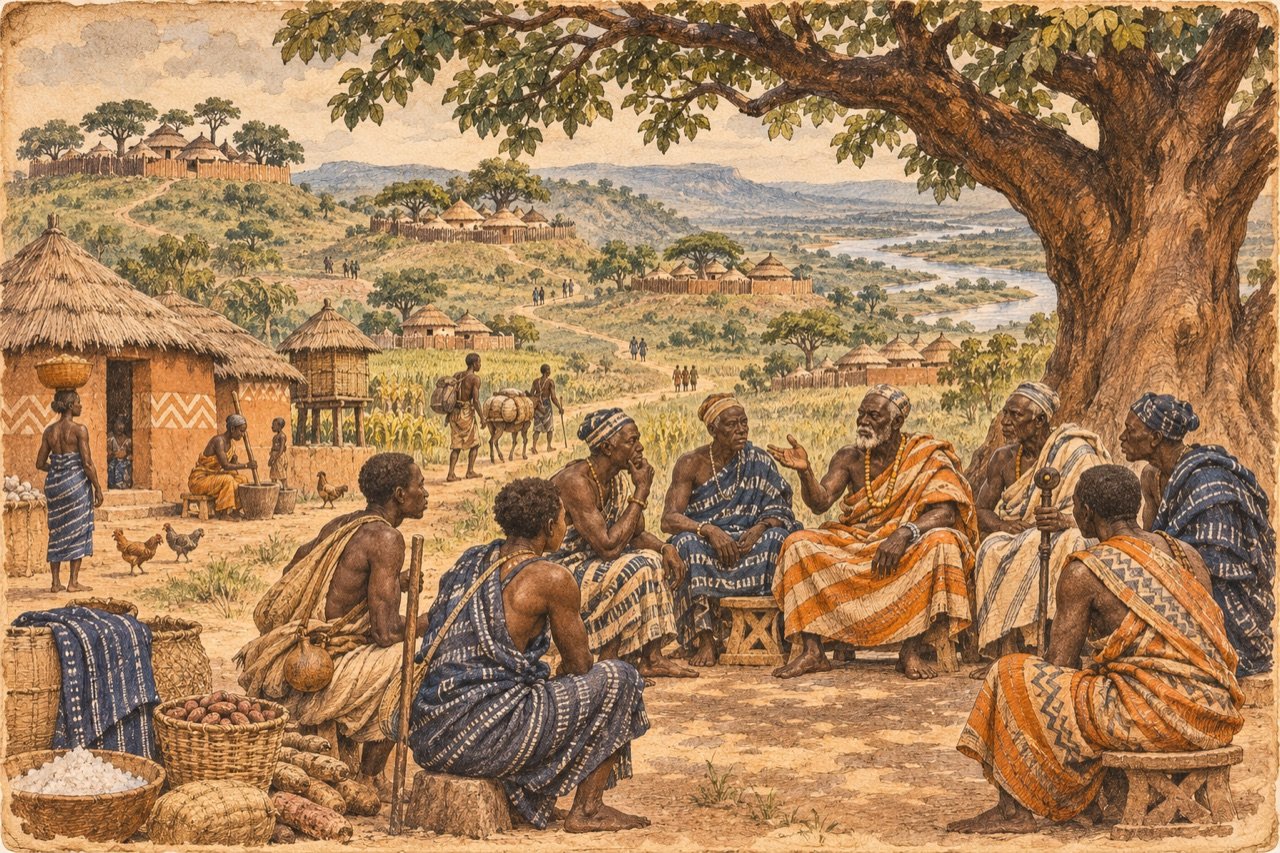


One regional label, many local histories
Wilson K. Yayoh’s study of Krepi states stresses that the name’s boundaries were never settled. European records applied “Krepi,” “Krepee” and related spellings to different territories. Danish usage could cover a broad stretch of Ewe-speaking country, while some British documents treated Krepi almost as another name for Peki or for a federation under the Peki ruler. Those meanings cannot simply be merged into a single, timeless map.
In present-day Ewe usage, Ewedome refers broadly to the northern Ewe-speaking area. The term is useful, but even it does not erase the distinct identities of its towns and traditional areas. Historical writers sometimes used “Krepi” for Ewedome, sometimes for a political alliance, and sometimes for a territory they believed Peki ruled. A careful account asks who used the word, when they used it, and what political purpose the description served.
Dukowo: communities with their own authority
Yayoh reconstructs the formation of central Volta states from communities whose ancestors arrived in stages after leaving Notsie. Migration chronology is debated: oral accounts preserve routes, leaders and reasons for departure, while historians compare those accounts with records, archaeology and the histories of neighbouring peoples. The evidence does not justify reducing every Ewe community to one identical migration story.
In the central region, lineages and settlements developed into local political units often called dukowo. Each could be organized around its own leadership, land, ritual responsibilities and relationships with neighbours. Peki became especially influential, but Ho, Kpando, Taviefe, Avatime, Agotime, Anum, Boso and other communities also had their own political lives. Yayoh estimates that by around 1700 the wider region contained many small, independent states; the exact count depends on how a historian defines a state and the area called Krepi.
This pattern was not evidence of a people without connection. Communities shared language, origin traditions, marriage and trade ties, and at times common military interests. But shared culture did not mean that one ruler governed every Ewe-speaking town. The history of the region is better understood as a network of communities that could cooperate, disagree and change alliances.
Alliances were powerful—and temporary
In the eighteenth and nineteenth centuries, Akwamu and Asante expansion brought new pressures to communities east of the Volta. Towns and rulers formed alliances to resist threats or protect trade and territory. The alliances could gather considerable force, yet they were not always permanent governments. Yayoh notes that coalitions could loosen when the immediate danger passed, as each state returned to its own priorities.
Peki’s importance grew through its political and commercial position, and its rulers sometimes claimed a wider leadership role. In the nineteenth century, the Peki ruler Kwadzo Dei signed documents using the title “King of Krepi.” British officials also found it convenient to deal with a single “head chief.” Yet other rulers resisted Peki’s authority. A title in a treaty or a colonial report is evidence of a claim and a negotiation; by itself, it is not proof that every town accepted permanent subordination. Read more about Peki’s inland connections in Peki and the Volta trade routes.
When colonial administration turned a flexible name into a boundary
As Britain and Germany competed for territory in the late nineteenth century, both powers relied on local treaties and on their own interpretations of African political geography. British officials attempted to recognize Kwadzo Dei as a leading authority in Krepi. Yayoh describes an 1886 agreement that briefly gave him a wider formal standing, while other chiefs questioned whether Peki could rule them. The British reading of a federation and the different local accounts of autonomy did not always match.
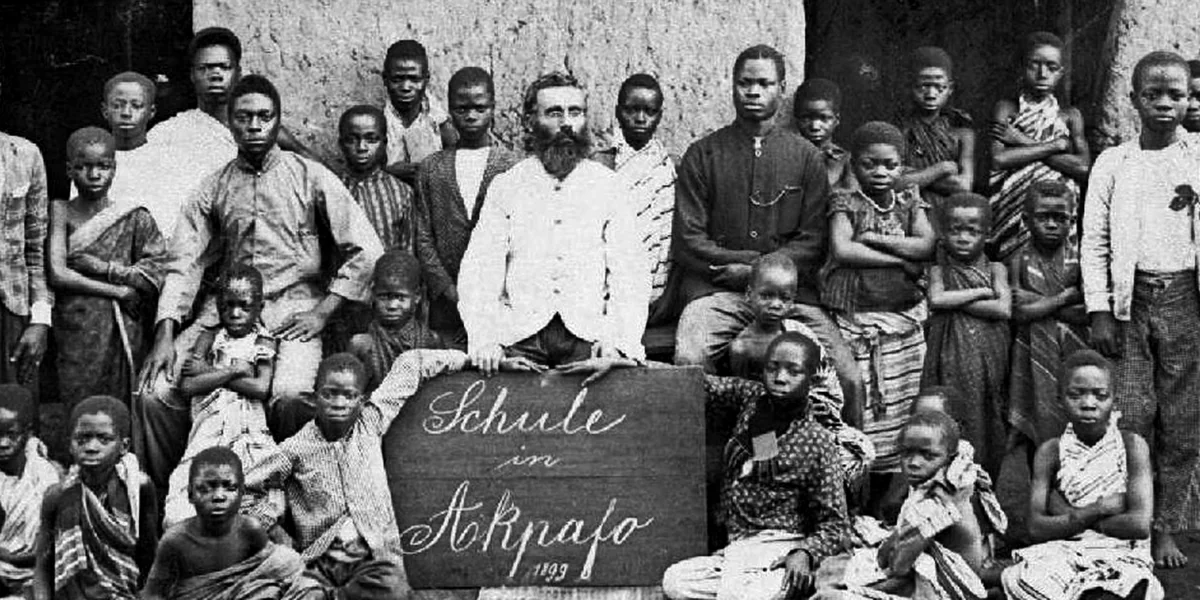
The Anglo-German boundary arrangements of 1885–1890 then divided Ewe-speaking communities between the British Gold Coast and German Togoland. Peki remained west of the border, while communities such as Kpando, Ho and Hohoe came under German rule. The border separated some families, farms and political relationships; it also created new administrative categories that later writers sometimes mistook for ancient divisions. This partition forms part of the background to the later Ewe unification movement.
What the history asks us to remember
There is no contradiction in saying that Ewe-speaking people share important cultural connections and that their ancestors belonged to distinct states. Both are part of the record. A shared migration narrative can bring communities together, while local histories preserve the authority and achievements of particular towns. Historians including Yayoh and Benjamin Lawrance show why the label “Krepi” must be read in context: it could describe a region, an alliance, a colonial administrative idea or a claim to leadership, depending on the source.
Did you know?
Some nineteenth-century British documents used “Krepi” and “Peki” almost interchangeably. That does not mean the names were always synonyms among the communities themselves. The difference between a local political identity and a label used by an outside official can change how an entire history is told.
Keep exploring: Visit the Ewe history archive, read about borders and the Togoland vote, or explore Fort Prinzenstein and Anlo sovereignty.
Sources and further reading
- Wilson K. Yayoh, “Krepi States in the Eighteenth and the Nineteenth Centuries,” Transactions of the Historical Society of Ghana, New Series, no. 6 (2002), pp. 67–81. University of Cape Coast repository.
- Benjamin N. Lawrance, “Ethnic Identity as an Anti-colonial Weapon? Ewe Mobilisation from the Late Nineteenth Century to the 1960s,” in Ethnicity and the Colonial State (Brill, 2017). Chapter and references.
- D.E.K. Amenumey, “The Pre-1947 Background to the Ewe Unification Question,” Transactions of the Historical Society of Ghana 10 (1969), pp. 65–85. JSTOR record.
- “Local Government in Ewedome, British Trust Territory of Togoland,” SOAS Research Online. Thesis PDF.
Written by Ewe Pride from historical scholarship. Dates and the boundaries of “Krepi” varied across oral traditions and colonial records; this account identifies those differences rather than treating one colonial map as definitive.
Share: