




A road out of the walled town
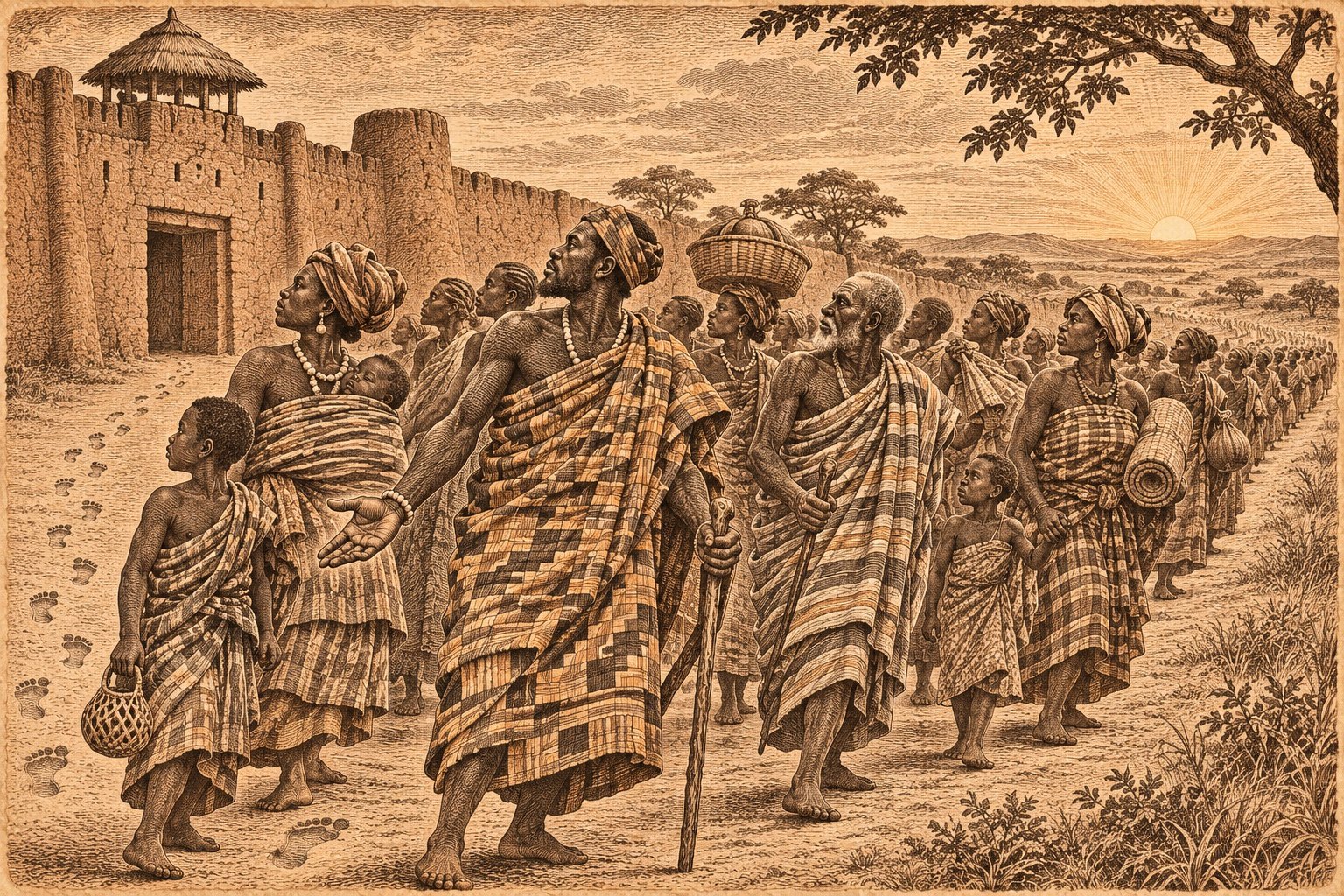
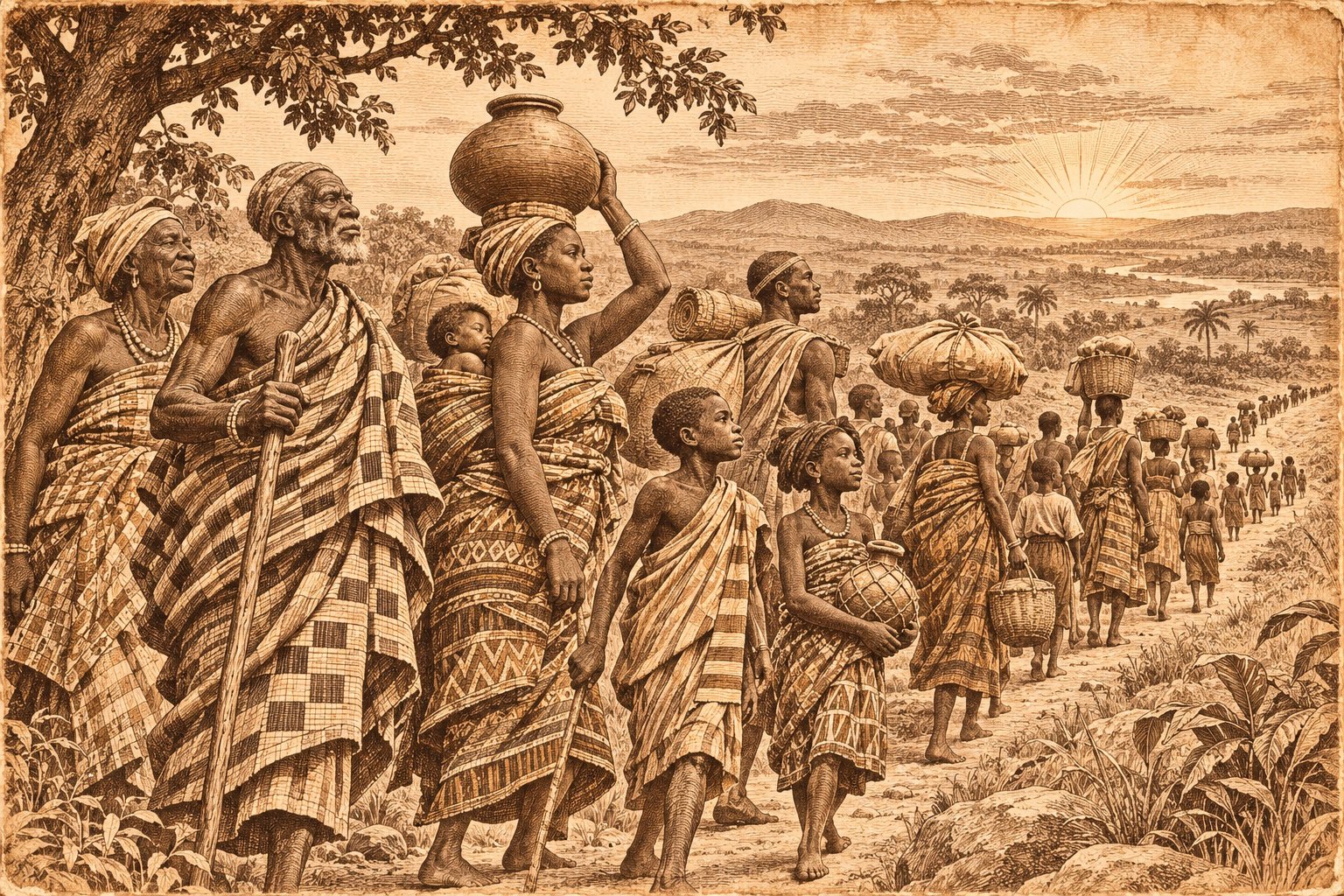
In one of the best-known Ewe migration stories, people escape from a walled settlement at night and set out toward new homes. The town is Notsie, in present-day Togo. The ruler is remembered as Agokoli. The people are said to have endured harsh demands, and the escape depends on patience, a hidden elder, a weakened wall and an ingenious trick: some fugitives walk backwards so the tracks confuse anyone following them.
It is a story with the shape of an adventure, but it is also a record of how communities remember history. The wall, the elder and the footprints are not details every teller gives in the same way. Researchers have found versions that differ in their leaders, routes and episodes. The differences matter. A single polished version can make it seem as if all Ewe-speaking communities left at one moment, under one leader, and arrived together. The evidence points to a more complex past.
Before Notsie
Notsie is not the only place named in Ewe accounts of earlier movement. Traditions refer to journeys through Ketu and Tado, in the region of present-day Benin, before settlement at Notsie. These histories connect Ewe communities with a wider Gbe-speaking world that includes Aja, Fon and other related peoples. Language helps researchers understand relationships across the region, but linguistic kinship by itself cannot prove a precise route or date.
Historical syntheses draw on oral accounts, archival records and archaeological findings. They describe successive movement and settlement across a landscape already occupied by different communities. The important point is not that every migrating group began in exactly the same place. It is that people moved, met others, formed communities and carried memories of those journeys into later generations.

The escape as communities remember it
In a familiar account, Agokoli’s demands become unbearable. He orders elders killed, but at least one is hidden. In some tellings the elder is Tegli, whose counsel helps the people plan their exit. Women repeatedly throw water against a section of the earthen wall, softening it. When the opening is ready, families pass through it and travel away. Those who follow walk backwards for a distance, making their footprints appear to lead toward the city rather than out of it.
The episode gives the story its memorable ingenuity. It also centers knowledge held by elders and collective labour rather than a lone hero. The water, the wall and the footprints are remembered through oral tradition; they should not be presented as an eyewitness report verified by archaeological evidence. A responsible history retells them vividly while making clear what kind of account they are.

One migration story, many local histories
Anlo tradition has its own leaders and explanations. Asogli tradition remembers Torgbe Kakla and his people as the ones who breached the wall. Other communities emphasize priests, elders, or later stages of the journey. Some versions describe a split into different streams of migration and the gradual founding of settlements. The fact that local memories differ does not make them disposable. Each tells us what a particular community has chosen to preserve about its ancestors and its place in a shared landscape.
Nor did Ewe-speaking communities become one centralized state after leaving Notsie. Research describes numerous local polities with their own leaders and institutions. These communities could form alliances, trade and share ritual ties while retaining distinct identities. The common migration memory became one way to express connection across these differences.
What the evidence can tell us
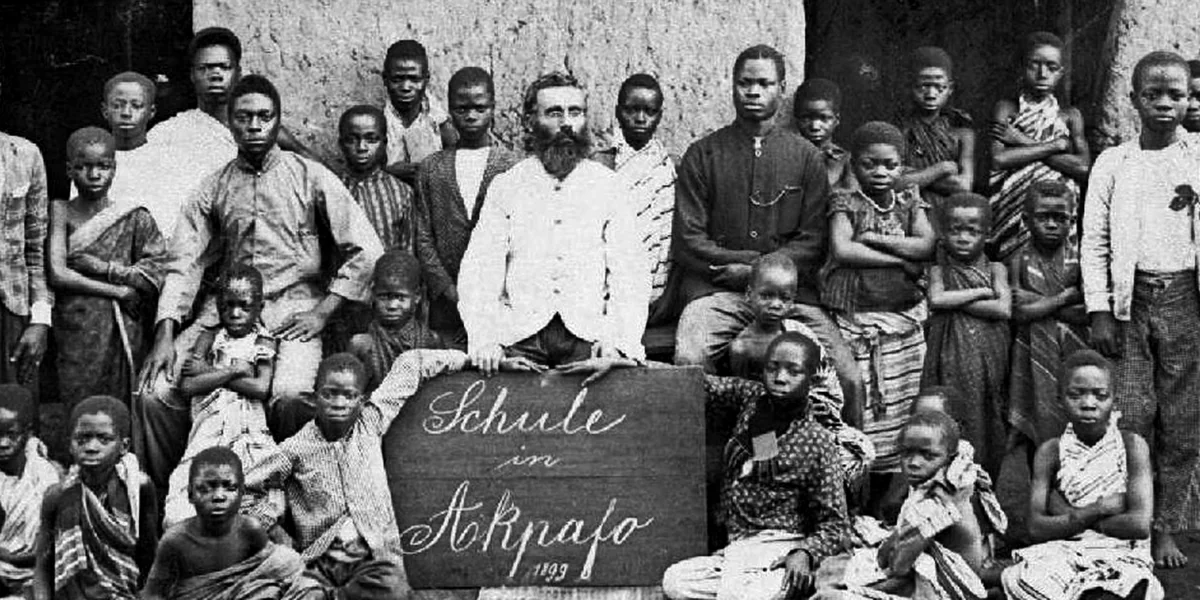
The town of Notsie was real and held regional importance. Its place in Ewe memory is also real: the story has shaped festivals, teaching and ideas about belonging. But the dates attached to the exodus vary, and scholars have studied how the narrative was written down and circulated during the colonial era. Bremen missionaries, schools and later political movements helped make Notsie a widely recognized point of origin for diverse Ewe-speaking communities. This history of retelling does not erase older traditions; it helps explain why some versions became especially prominent.
Archaeology adds questions rather than a final answer. Excavations at Mountain Agbenu in Abutia found evidence of occupation dating to the fifteenth century, earlier than the seventeenth-century date often assigned to migration from Notsie. That finding confirms human occupation, not the identity of every group living there. It reminds us that local settlement histories may be older and more layered than a single migration timeline suggests.
The strongest account, then, holds two truths together: Notsie is a central place of Ewe historical memory, and the histories of Ewe communities cannot be reduced to one identical journey. The story remains powerful because it carries memory of resistance, adaptation and the making of new homes. It links people across modern borders without requiring every community to tell the past in the same words.
The wall is a landmark, not a single date
One reason the Notsie account continues to attract attention is that it solves a problem of belonging. Ewe-speaking communities live across Ghana, Togo and Benin, and their histories do not fit inside the borders drawn by European empires. A shared story of departure offers a language for connection. It says that people who are now separated by a river, a frontier post or a national passport can still remember a road out of a place together.

The story should not be made to carry more precision than its evidence allows. Oral histories recorded in different places do not produce one synchronized itinerary. Some accounts name Ketu or Tado as stages; some focus on Notsie; others remember older ancestral places farther east or north. A nineteenth-century visitor, a missionary writing down a narrator’s account, and a contemporary festival speaker are not interchangeable witnesses. Each records memory in a particular relationship and moment.
Jakob Spieth’s 1906 study is valuable here because it preserves more than one Ho-area account instead of smoothing them into a single script. Some tellers identified Notsie as a place their ancestors had occupied; others described a walled ancestral town with a different name or located it beyond Notsie. One Ho tradition credited the Ho people with opening the wall and said others followed. This does not prove that Ho alone led a historic exodus. It shows that local communities used the shared wall story to explain their own place within a wider history.
Historians therefore ask several questions at once: where was a community living at a given time; how did it move; when did it begin using a shared ethnic name; and when did a particular account become prominent in public life? Those questions can have different answers. A migration may unfold across generations, while a later political or religious movement gives one version broad circulation. Calling the story “memory” does not make it false. It identifies how it can be known and what kinds of corroboration it needs.
Archaeology can establish that a site was occupied and help date walls, pottery or settlement layers. It cannot, on its own, identify a potter as Ewe or prove that a particular person named Agokoli ordered a specific act. Linguistics can trace the relationships among Gbe languages, but related speech does not supply a complete family tree of migration. Written records can give dates for a colonial treaty or a town’s appearance in an archive, but they may begin centuries after the movement communities remember.
That is why a strong Ewe history holds local accounts beside one another. The route remembered in Anlo, the account in Ho, and a tradition from Kpando or Abutia are not pieces to force into one seamless movie. They are records of how communities understand ancestry, authority and the right to belong to a place. The central image—the difficult escape from a walled town—can remain vivid while the article is candid about the many journeys and times it may represent.
For readers, this layered approach changes the question from “Which single version is the true one?” to “What does each community’s account preserve, and what other evidence can help us understand its setting?” It allows the Notsie story to remain a living inheritance without turning every oral detail into a claim of courtroom certainty.
Sources and further reading
- Sandra E. Greene, “Notsie Narratives: History, Memory, and Meaning in West Africa,” The South Atlantic Quarterly (2002)
- Review of Nicoué Lodjou Gayibor, ed., Les Ewe (Togo, Ghana, Bénin), African Studies Review (2022)
- Cambridge study, “International chiefs” and transborder Ewe communities
- University of Ghana, archaeological investigation of Mountain Agbenu
- Jakob Spieth, The Ewe People: A Study of the Ewe People in German Togo (1906; English translation, Sub-Saharan Publishers, 2011), especially the Ho history, pp. 64–83 (supplied book)
Share: